Shelly Manne
¿Quién es Shelly Manne?
Manne's father Max Manne and uncles were drummers. In his youth he admired many of the leading swing drummers of the day, especially Jo Jones and Dave Tough. Billy Gladstone, a colleague of Manne's father and the most admired percussionist on the New York theatrical scene, offered the teenaged Shelly tips and encouragement.
From that time, Manne rapidly developed his style in the clubs of 52nd Street in New York in the late 1930s and 1940s. His first professional job with a known big band was with the Bobby Byrne Orchestra in 1940. In those years, as he became known, he recorded with jazz stars like Coleman Hawkins, Charlie Shavers, and Don Byas. He also worked with a number of musicians mainly associated with Duke Ellington, like Johnny Hodges, Harry Carney, Lawrence Brown, and Rex Stewart.
In 1942, during World War II, Manne joined the Coast Guard and served until 1945.
In 1943, Manne married a Rockette named Florence Butterfield (known affectionately to family and friends as "Flip"). The marriage would last 41 years, until Shelly Manne's death.
When the bebop movement began to change jazz in the 1940s, Manne loved it and adapted to the style rapidly, performing with Dizzy Gillespie and Charlie Parker. Around this time he also worked with rising stars like Flip Phillips, Charlie Ventura, Lennie Tristano, and Lee Konitz.
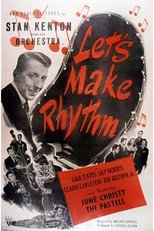
Manne rose to stardom when he became part of the working bands of Woody Herman and, especially, Stan Kenton in the late 1940s and early 1950s, winning awards and developing a following at a time when jazz was the most popular music in the United States. Joining the hard-swinging Herman outfit allowed Manne to play the bebop he loved. The controversial Kenton band, on the other hand, with its "progressive jazz", presented obstacles, and many of the complex, overwrought arrangements made it harder to swing. But Manne appreciated the musical freedom that Kenton gave him and saw it as an opportunity to experiment along with what was still a highly innovative band. He rose to the challenge, finding new colors and rhythms, and developing his ability to provide support in a variety of musical situations.
In the early 1950s, Manne left New York and settled permanently on a ranch in an outlying part of Los Angeles, where he and his wife raised horses. From this point on, he played an important role in the West Coast school of jazz, performing on the Los Angeles jazz scene with Shorty Rogers, Hampton Hawes, Red Mitchell, Art Pepper, Russ Freeman, Frank Rosolino, Chet Baker, Leroy Vinnegar, Pete Jolly, Howard McGhee, Bob Gordon, Conte Candoli, Sonny Criss, and numerous others. Many of his recordings around this time were for Lester Koenig's Contemporary Records, where for a period Manne had a contract as an "exclusive" artist (that is, he needed permission to record for other labels). ...
Source: Article "Shelly Manne" from Wikipedia in English, licensed under CC-BY-SA 3.0.
Trabajos destacados
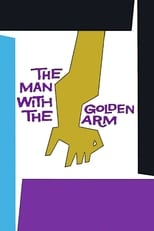
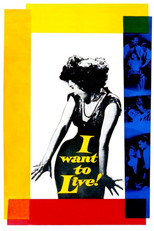
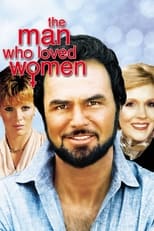


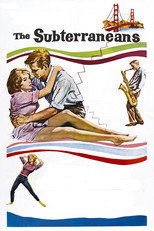
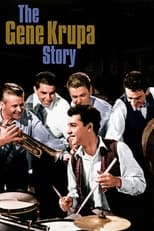
Géneros más habituales en las películas de Shelly Manne
Géneros más habituales en las series de Shelly Manne
Compañeros de trabajo recientes de Shelly Manne
Las imágenes y retratos de actores y actrices mostrados en este sitio web son obtenidos de la base de datos pública de The Movie Database (TMDb), utilizada bajo los términos y condiciones de dicha plataforma. En caso de que alguna imagen o fotografía sea incorrecta, ofensiva, o pueda infringir derechos de imagen o copyright, puede ser editada o eliminada directamente en TMDb. Esto provocará su eliminación automática en este sitio web. Adicionalmente, si usted desea solicitar la eliminación de una imagen directamente en nuestro sitio web, puede utilizar el formulario de contacto ubicado al pie de la página. Atenderemos su solicitud de manera expedita y tomaremos las medidas necesarias para garantizar el cumplimiento de los derechos aplicables.
The images and portraits of actors and actresses displayed on this website are sourced from the public database The Movie Database (TMDb), used in accordance with its terms and conditions. If any image or photograph is incorrect, offensive, or may infringe image rights or copyright, it can be edited or removed directly on TMDb. This will automatically result in its removal from this website. Additionally, if you wish to request the removal of an image directly from our website, you may use the contact form located at the bottom of the page. We will promptly address your request and take the necessary measures to ensure compliance with applicable rights.