Miriam Hopkins
¿Quién es Miriam Hopkins?
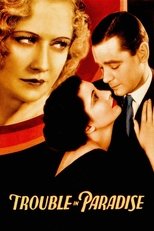
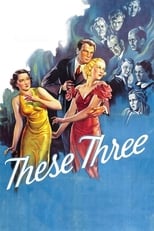
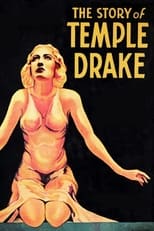
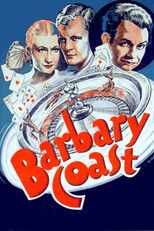
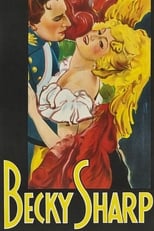
Nevertheless, her career ascended swiftly thereafter and in 1932 she scored her breakthrough in Ernst Lubitsch's Trouble in Paradise, where she proved her charm and wit as a beautiful and jealous pickpocket. During the pre-code Hollywood of the early 1930s, she appeared in The Smiling Lieutenant, The Story of Temple Drake and Design for Living, all of which were box office successes and critically acclaimed. Her pre-Code films were considered risqué at the time, with The Story of Temple Drake depicting a rape scene and Design for Living featuring a ménage à trois with Fredric March and Gary Cooper. She also had success during the remainder of the decade with the romantic comedy The Richest Girl in the World (1934), the historical drama Becky Sharp (1935), for which she was nominated for the Academy Award for Best Actress, Barbary Coast (1935), These Three (1936) (the first of four films with director William Wyler) and The Old Maid (1939).
Hopkins was one of the first actresses approached to play the role of Ellie Andrews in It Happened One Night (1934). However, she rejected the part, and Claudette Colbert was cast instead. She did audition for the role of Scarlett O'Hara in Gone with the Wind, having one advantage none of the other candidates had: she was a native Georgian. But the part went to Vivien Leigh. Both Colbert and Leigh won Oscars for their performances.
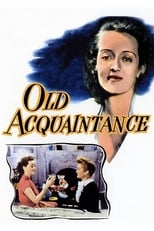
Hopkins had well-publicized fights with her arch-enemy Bette Davis (Hopkins believed Davis was having an affair with Hopkins' husband at the time), when they co-starred in their two films The Old Maid (1939) and Old Acquaintance (1943). Davis admitted to enjoying very much a scene in Old Acquaintance in which she shakes Hopkins forcefully during a scene where Hopkins' character makes unfounded allegations against Davis's. There were even press photos taken with both divas in a boxing ring with gloves up and director Vincent Sherman between the two.
Hopkins was a television pioneer, performing in teleplays in three decades, spanning the late 1940s through the late 1960s, in such programs as The Chevrolet Tele-Theatre (1949), Lux Video Theatre (1951-1955) and even an episode of The Flying Nun in 1969.
She has two stars on the Hollywood Walk of Fame: one for motion pictures at 1701 Vine Street, and one for television at 1708 Vine Street.
Trabajos destacados
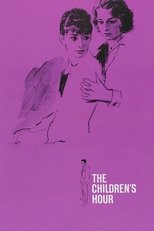

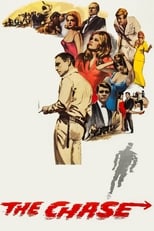
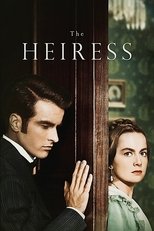


Géneros más habituales en las películas de Miriam Hopkins
Géneros más habituales en las series de Miriam Hopkins
Compañeros de trabajo recientes de Miriam Hopkins
Las imágenes y retratos de actores y actrices mostrados en este sitio web son obtenidos de la base de datos pública de The Movie Database (TMDb), utilizada bajo los términos y condiciones de dicha plataforma. En caso de que alguna imagen o fotografía sea incorrecta, ofensiva, o pueda infringir derechos de imagen o copyright, puede ser editada o eliminada directamente en TMDb. Esto provocará su eliminación automática en este sitio web. Adicionalmente, si usted desea solicitar la eliminación de una imagen directamente en nuestro sitio web, puede utilizar el formulario de contacto ubicado al pie de la página. Atenderemos su solicitud de manera expedita y tomaremos las medidas necesarias para garantizar el cumplimiento de los derechos aplicables.
The images and portraits of actors and actresses displayed on this website are sourced from the public database The Movie Database (TMDb), used in accordance with its terms and conditions. If any image or photograph is incorrect, offensive, or may infringe image rights or copyright, it can be edited or removed directly on TMDb. This will automatically result in its removal from this website. Additionally, if you wish to request the removal of an image directly from our website, you may use the contact form located at the bottom of the page. We will promptly address your request and take the necessary measures to ensure compliance with applicable rights.