Ofra Haza
¿Quién es Ofra Haza?
Of Yemenite-Mizrahi descent, Haza performed music known as a mixture of traditional Middle Eastern and commercial singing styles, fusing elements of Eastern and Western instrumentation, orchestration and dance-beat, as well as lyrics from Mizrahi and Jewish folk tales and poetry. By the late 1980s, Haza was an internationally successful artist, achieving large success in Europe and the Americas and appearing regularly on MTV. During her singing career, she earned many platinum and gold discs and her music proved highly popular in the club scene. By the 1990s, at the peak of her career, she was regularly featured in movie soundtracks, such as that of Dick Tracy (1990) and famously in The Prince of Egypt (1998), and her vocals were popularly sampled in hip hop. Her death in 2000 from an AIDS-related illness shocked Israeli society.
Haza was a highly influential cultural figure in Israel, and is considered one of the country's biggest cultural icons, who helped popularize Mizrahi culture.
Bat-Sheva Ofra Haza was born in Tel Aviv, Israel, to Mizrahi Jewish parents from Yemen who had emigrated to Israel in 1949 with eight children. She was the youngest of nine children (six sisters and two brothers) born to Yefet and Shoshana Haza. They were raised in a Masorti household in the Hatikva Quarter, then an impoverished, working-class area of Tel Aviv. Although named Bat-Sheva by her parents, her sisters disliked the name, and preferred to call her by her middle name, Ofra, instead.
Haza's earliest musical influences included her learning traditional Yemenite songs from her parents; Haza's mother in particular, Shoshana, proved a major influence on her musical direction. Shoshana had been a professional singer in Yemen and often performed at family celebrations, with Haza also recalling her mother singing to her children from an early age. Additionally early influences in her music came from Israeli folk songs, the Beatles, and Elvis Presley.
Haza herself began to exhibit a similar musical inclination to that of her mother, and began singing at an early age, including at local weddings and as a soloist in her school choir. At the age of 12, Haza joined a local protest theatre troupe, named “Hatikva” (The Hope) which had been recently founded by a neighbour of hers, Bezalel Aloni. Haza soon emerged as one of the most gifted performers in the troupe, and manager Bezalel Aloni soon noticed her singing talent. He featured her at front of stage in many of his productions, and later became her manager and mentor. At the age of 19, she was Israel's foremost pop star, and news articles have retrospectively described her as "the Madonna of the East". ...
Source: Article "Ofra Haza" from Wikipedia in English, licensed under CC-BY-SA.
Trabajos destacados




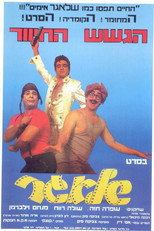



Géneros más habituales en las películas de Ofra Haza
Géneros más habituales en las series de Ofra Haza
Compañeros de trabajo recientes de Ofra Haza
Las imágenes y retratos de actores y actrices mostrados en este sitio web son obtenidos de la base de datos pública de The Movie Database (TMDb), utilizada bajo los términos y condiciones de dicha plataforma. En caso de que alguna imagen o fotografía sea incorrecta, ofensiva, o pueda infringir derechos de imagen o copyright, puede ser editada o eliminada directamente en TMDb. Esto provocará su eliminación automática en este sitio web. Adicionalmente, si usted desea solicitar la eliminación de una imagen directamente en nuestro sitio web, puede utilizar el formulario de contacto ubicado al pie de la página. Atenderemos su solicitud de manera expedita y tomaremos las medidas necesarias para garantizar el cumplimiento de los derechos aplicables.
The images and portraits of actors and actresses displayed on this website are sourced from the public database The Movie Database (TMDb), used in accordance with its terms and conditions. If any image or photograph is incorrect, offensive, or may infringe image rights or copyright, it can be edited or removed directly on TMDb. This will automatically result in its removal from this website. Additionally, if you wish to request the removal of an image directly from our website, you may use the contact form located at the bottom of the page. We will promptly address your request and take the necessary measures to ensure compliance with applicable rights.