Maurice Druon
¿Quién es Maurice Druon?
Born in Paris, France, Druon was the son of Russian-Jewish immigrant Lazare Kessel (1899–1920) and was brought up at La Croix-Saint-Leufroy in Normandy and educated at the lycée Michelet de Vanves. His father committed suicide in 1920 and his mother remarried in 1926; Maurice subsequently took the name of his adoptive father, the lawyer René Druon (1874–1961).
He was the nephew of the writer Joseph Kessel, with whom he translated the Chant des Partisans, a French Resistance anthem of World War II, with music and words (in Russian) originally by Anna Marly. Druon was a member of the Resistance and came to London in 1943 to participate in the BBC's "Honneur et Patrie" programme.
Druon began writing for literary journals at the age of 18. In September 1939, having been called up for military service, he wrote an article for Paris-Soir entitled "J'ai vingt ans et je pars (I am twenty years old and I am leaving)". Following the fall of France in 1940, he was demobilized and remained in the unoccupied zone of France, and his first play, Mégarée, was produced in Monte Carlo in February 1942. He left the same year to join the forces of Charles de Gaulle. Druon became aide de camp to General François d'Astier de La Vigerie.
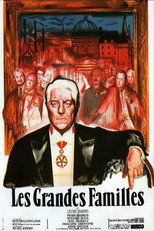
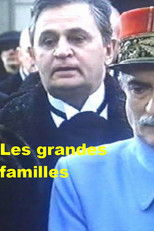
In 1948 Druon received the Prix Goncourt for his novel Les Grandes Familles, and later published two sequels.
Druon was elected to the 30th seat of the Académie française on 8 December 1966, succeeding Georges Duhamel. He was elected as "Perpetual Secretary" in 1985, but chose to resign the office in late 1999 due to old age; he successfully pushed for Hélène Carrère d'Encausse to succeed him, the first woman to hold the post, and was styled Honorary Perpetual Secretary after 2000. On the death of Henri Troyat on 2 March 2007, he became the Dean of the Académie, its longest-serving member.
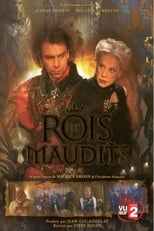
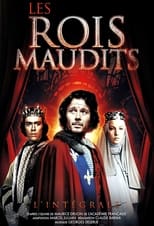
While his scholarly writing earned him a seat at the Académie, Druon is best known for a series of seven historical novels published in the 1950s under the title Les Rois maudits (The Accursed Kings). The novels were adapted for French television in 1972, gaining a wider audience through overseas sales, and again in 2005, starring Jeanne Moreau. Fantasy writer George R. R. Martin stated that the novels had been an inspiration for his fantasy series A Song of Ice and Fire, and called Druon "France's best historical novelist since Alexandre Dumas, père".
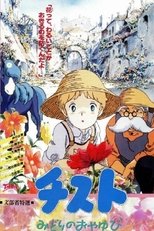
Druon's only work for children – Tistou les pouces verts – was published in 1957 and translated into English in 1958 (as Tistou of the Green Thumbs) and 2012 (as Tistou: The Boy With Green Thumbs).
Druon was Minister of Cultural Affairs (1973–1974) in Pierre Messmer's cabinet, and a deputy of Paris (1978–1981). He was survived by his second wife, Madeleine Marignac, whom he married in 1968. Madeleine Druon died in 2016 aged 91. Druon was a descendant of Brazilian author Odorico Mendes.
Source: Article "Maurice Druon" from Wikipedia in English, licensed under CC-BY-SA 3.0.
Trabajos destacados

Géneros más habituales en las películas de Maurice Druon
Géneros más habituales en las series de Maurice Druon
Compañeros de trabajo recientes de Maurice Druon
Las imágenes y retratos de actores y actrices mostrados en este sitio web son obtenidos de la base de datos pública de The Movie Database (TMDb), utilizada bajo los términos y condiciones de dicha plataforma. En caso de que alguna imagen o fotografía sea incorrecta, ofensiva, o pueda infringir derechos de imagen o copyright, puede ser editada o eliminada directamente en TMDb. Esto provocará su eliminación automática en este sitio web. Adicionalmente, si usted desea solicitar la eliminación de una imagen directamente en nuestro sitio web, puede utilizar el formulario de contacto ubicado al pie de la página. Atenderemos su solicitud de manera expedita y tomaremos las medidas necesarias para garantizar el cumplimiento de los derechos aplicables.
The images and portraits of actors and actresses displayed on this website are sourced from the public database The Movie Database (TMDb), used in accordance with its terms and conditions. If any image or photograph is incorrect, offensive, or may infringe image rights or copyright, it can be edited or removed directly on TMDb. This will automatically result in its removal from this website. Additionally, if you wish to request the removal of an image directly from our website, you may use the contact form located at the bottom of the page. We will promptly address your request and take the necessary measures to ensure compliance with applicable rights.